Tuesday, May 13, 2008

where truces and cease fires grow on trees…


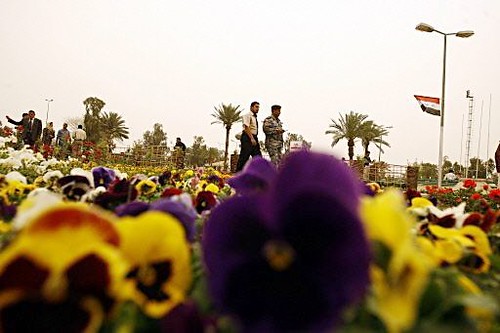
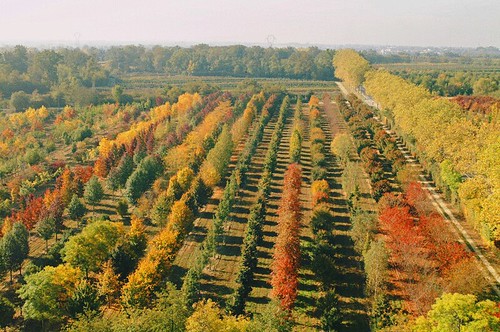
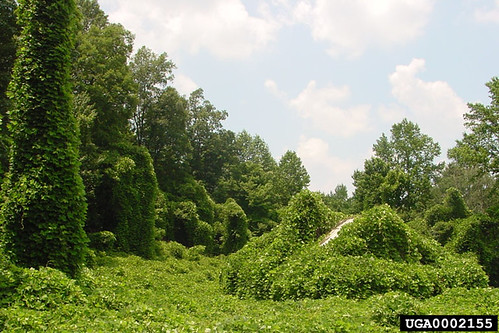
[Image: Former 'Inner German Border' Provides Haven for Wildlife, Spiegel, May 13, 2008.]

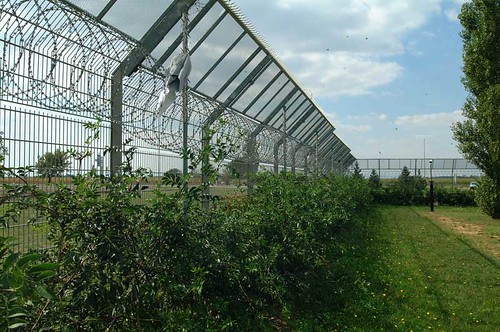
While the "inner German border” that once divided East and West Germany decades ago, stretching 879 miles from the Baltic Sea to the Czech Republic, was a tangled jungle of barbed wire, landmines, booby traps and soldier patrols, it was also, much like the Korean DMZ, a kind of sanctuary for considerable wildlife.
When the Berlin Wall fell German environmentalists fought to protect the long line of no-man’s-land as a Green Belt, connecting it with Europe’s larger green belt that has followed the path of the Iron Curtain from the north of Finland south to the Adriatic Sea.


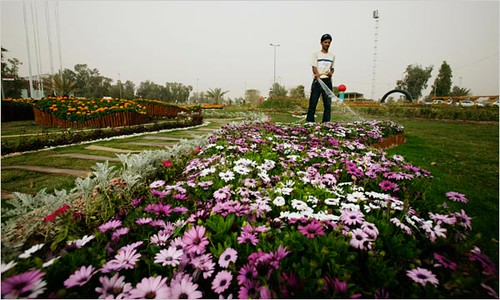
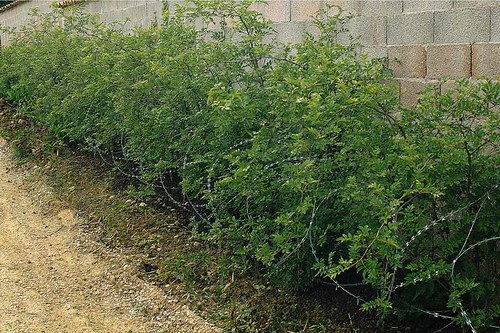
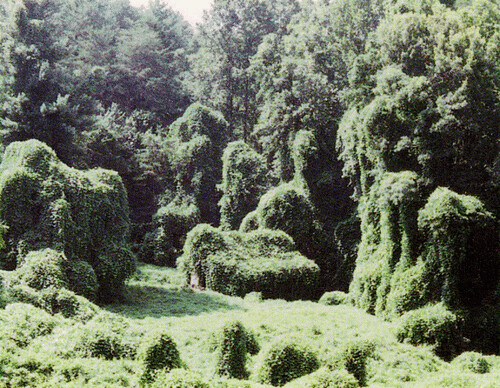
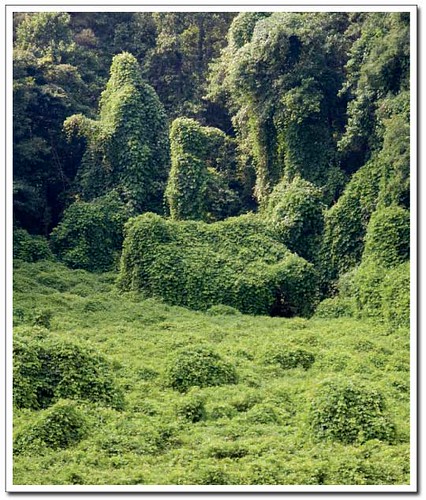
[Image: Former 'Inner German Border' Provides Haven for Wildlife, Spiegel, May 13, 2008.]

Up until now the German Green Belt has had very little legal protection, and while it still has a long ways to go, Spiegel reports that the groundwork for a new agreement between the federal Government and the local German states which directly assume responsibility for the Green Belt have reached some form of legal outlines for its protection. Currently, only a third of the natural corridor is designated a nature conservation area, but that could soon be increased. The Green Belt itself though is of great interest.
The no-man's-land that emerged, ranging from 60 to 200 meters wide, provided the ideal conditions for the flourishing of flora and fauna. Up to 600 endangered species, including the black stork and the lady's slipper orchid, thrived in this unusual terrain.

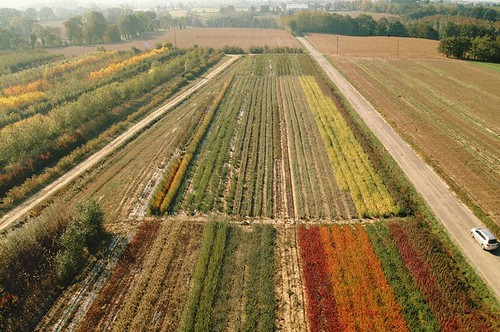
What has made this green corridor remarkable is the interlocking of over 100 types of biotopes, including forests, fens and meadows. Hubert Weiger, president of BUND, told the Süddeutsche Zeitung on Tuesday that "in other places species become extinct because their habitats shrink to islands due urban sprawl." According to Geidezis this is unique in Central Europe. "You don't find these connecting biotopes in Europe any more. Most have been split up, preventing animals from traveling from place to place."


I will leave you to go read about the details of the legal proceedings that aim to protect the Green Belt. I am more curious about what perhaps it could symbolize in a heightened era of protracted border security.
What if somehow in a great show of geopolitical magic all of the border fences, boundary walls and separation barriers that callous the world’s neighborly skin suddenly vanished? Miles of scrappy national security architecture just dissolved in a great disappearing act leaving only trails of dirt behind on its barren stage. And then, over the course of a few years, filling in these tracts of severed farms and semi-conquered wetlands, of annexed soils and halved rural pasturtopias, new post-conflict species of borderzone flora and fauna colored in the rugged footprints with epic flourishes of greenery.
Forgive me for sounding ridiculously hippie dippie here, but imagine the borders of the future bound in bloom instead of barricade; crossings blended by mossy sutures rather than surgical fences and political non-futures.


Suppose these old curvilinear scars of border space could be remade into the world’s longest and narrowest public parks project. Bi-national teams of landscape architects and horticulturalists are organized from both sides of all the old fences. Each region designs its own celestial garden corridor -- a strip garden in a long line of international strip gardens -- that turns the remnant jetties of border conflict into opulent open air greenhouses shared and protected by joint nations. Local cross-border communities would maintain them. Dignitaries from all over the world would hail them as these long lush paths to political healing, while travelers and ecologists would wander down the rolling green carpets siphoning unsmelled fragrances through their nostrils and basking in the Eden like experience of post-militarized botanical reverie. The border grown into the geography of a dispersed global ecological refuge. Stitching nations together with enclaves of freshly oxygenated public space these elongated nature preserves would help to spawn innovative conservation policy, allow new species to emerge, and even old ones to re-emerge. Call them peace parks, green belts, border gardens, whatever, Subtopia will surely be there enjoying an eternal picnic under those canopies where truces and cease fires grow on trees.
Friday, May 09, 2008

The Rise and Fall of Blackwater in Potrero


[A follow up to Alternate Focus's documentary on Blackwater's plan to move into Potrero, California, five miles from Tecate, Mexico, to build a "gun sportsman's paradise", before meeting local resistance and finally packing it up. Part 1 back here. Now, keep your eyes on Otay Mesa. (Well done Andy!)]

Tuesday, May 06, 2008

Blackwater bubbling under the border skin...


[Image: Blackwater Otay, via Raymond Lutz / Citizens Oversight.]

Well, just when you thought Blackwater USA had pulled up stakes in SoCal, news breaks that the private military contracting firm is allegedly setting up a very private little shop just three blocks away from the US-Mexican border, this time in Otay Mesa. Yes, sir. Real sneaky-like, too.
Amy Goodman ran an enlightening interview with Raymond Lutz (responsible for stopblackwater.net and Citizens Oversight, and an important voice in heading off the Potrero shooting range), and California’s Rep. Bob Filner.


[Image: Blackwater Otay, via Raymond Lutz / Citizens Oversight.]

Apparently, she says “Blackwater received approval for the 61,000 square-foot indoor facility in Otay Mesa, California, by filing for permits using the names of two subsidiaries. It was only last week when San Diego officials learned Blackwater was behind the project.”
Lutz tells us that while the bands were out rallying months ago loudly against Blackwater West in Potrero the firm was quietly “in the process of filing these permits under the names Raven Development and Southwest Law Enforcement”, understood to be “under a shell company out in Puerto Rico.”


[Image: Blackwater Otay, via Raymond Lutz / Citizens Oversight.]

He brings us some pics of the site and says he “drove down to check it out,” and indeed “could see the ventilation equipment out the back of the building, which is apparently necessary for the indoor shooting range that they’re intending to put in.”
I will leave you to read the rest – and do it. While Blackwater is listing this as a vocational school, it seems to be more and more obvious that not only is it a shooting range with possible pollution consequences of its own, but perhaps there are other just as secret political and profiteering consequences to uncover, not to mention the foul symbolic messaging of this project as well.


[Image: Blackwater Otay, via Raymond Lutz / Citizens Oversight.]

As if the border fencing, the surveillance, the drones, the national guard, P-28, and all the other informal militarizations of the border already isn’t enough to be staging it as some sort of future warzone, throw in the presence of a Blackwater and now what are we all supposed to believe? Can you spell border-industrial-complex? How will Blackwater engage the border? What role will they cement for themselves down there? Will they work with the Border Patrol? Will they take over certain responsibilities of the Border Patrol? Will Blackwater take it upon themselves to start “securing the border”? Shouldn’t we be wary of companies like this even adding themselves to the complex archeology of border politics down there at all? And what kind of message does it send to the communities there, on both sides of the fence – that their neighborhood is an ideal spot for secret warfare training? It is so obvious Blackwater wants their own little piece of the border pie, a presence there, but why? Why does it seem they are so aggressive about camping out along the fence? What government contracts for border security are they fishing for, or do they already have? What are the spatial politics to unravel here? Whose real estate is this, really? What other companies are also behind this? Is the site a strategic location for something other than just Blackwater? How involved is the hand of American politics, who specifically? I wonder what if anything we would find if we were to peel the roof off this place?

(Thanks Jav for the tip!)

Thursday, May 01, 2008

The Storefront is getting a little 'military urbanism' makeover


[Image: (G)host in the (S)hell, by Didier Fiuza Faustino, an exhibition at the Storefront for Art and Architecture in NYC, May 13th, 2008.]

I’ve always loved how the Storefront for Art and Architecture looks like a subtle inner-city bunker right there in Soho, and how transformative it is by both day and night when it all zips up and innocuously reabsorbs itself into the veneer of the sidewalk corner space again. My dream home functions like this, too!
An upcoming installation at the gallery instantly makes me realize how intensely I miss New York City (in fact, I’m dying – dying – to get back there), namely because the only real time I spent there thus far was for Postopolis! where Joseph put me under a wicked spell that I hope never releases me from its urban grip. All I can say now is – I sure do miss that city, the Storefront, and just hanging out with everyone there. Man! It’s ridiculous I have not been out there since. It’s hellish, actually.
Anyhow, the gallery has got something cooking that is right up our alley, and if I were in any better traveling shape I’d find a way out there for all possible reasons. (Note to self: Get to NYC by year end or, or else…).
Pushing the physical and philosophical boundaries that have made the Storefront what it is for years, with its perforated façade and radical reflections on spatial practice, French artist and architect Didier Fiuza Faustino on May 13th will hijack the space and bound it in his own bordery intervention that he’s calling the (G)host in the (S)hell.


[Image: (G)host in the (S)hell, by Didier Fiuza Faustino, an exhibition at the Storefront for Art and Architecture in NYC, May 13th, 2008.]

Check it out: The plan is to engage “the gallery’s iconic swinging panel doors” with a “galvanized steel chain-link fence” and challenge “the façade’s role as a perpetually morphing mobile wall.”

"(G)host in the (S)hell will weave in and out through the openings in the facade, thus delimiting the space created by the motion of Storefront’s panels. The fencing will fasten the panels in an open position, revealing the gallery as a vulnerable, accessible space, yet simultaneously creating a cage between the gallery and the street. During the daytime, six single swing doors will allow visitors to enter the fenced-off space and then enter the gallery. The gallery will remain open, protected only by the fence, for the entire period of the exhibition."

Sounds sick. Timely, to say the least, and very nicely Subtopian.
I love the thought of just taking places – ordinary or not – and encasing them in strange meshes of urban barrier, giving them their own little tailor made military urbanism, as if to tease out some fortressized projections of themselves, or kind of help expose the spatial egos of a place and how intertwined urban space is now with security. And then just sit back and see how the public responds.


[Image: (G)host in the (S)hell, by Didier Fiuza Faustino, an exhibition at the Storefront for Art and Architecture in NYC, May 13th, 2008.]

Of course, I'd love to see how this turns out. Anything examining interwoven chain link fences and mobile walls has got our interest. I dig how it intends to blur qualities of guarded and ultimately vulnerable space together, and devise a new subversive medium out of the gallery itself – the gallery being a sanctuary of cultural openness and showcase as well as a symbol of optimal public space. The inner/outer nature of the Storefront is the perfect host for this installation.
Should be interesting.
According to the press release, “The installation will also include elements of light, sound and video. Two powerful strobe beacons, normally used in airports, will illuminate the gallery’s interior at night, transforming the inaccessible space into a visual attractor even when the gallery is closed.”
But I wonder, for all those New Yorkers who have walked by that funky art space for years, what will they think when they find that those groovy panels have suddenly become boarded up with heavy duty chain link fencing? Will they assume it’s been taken over by the cops? Was the Storefront the scene of some horrendous crime? Will it appear that the Storefront had finally been publicly condemned? Is it crumbling apart, has it become a safety hazard, is it undergoing intriguing new repairs? How will the passerbys feel about those classic entryways now being converted into some flexible militarized stopgap to appreciating a little art on their lunchbreak? Has the Storefront suddenly allied itself with the anti-homeless brigade in Manhattan illustrating now some new urban tactic to repel vagrants, teenagers, killer pigeons maybe?


[Image: (G)host in the (S)hell, by Didier Fiuza Faustino, an exhibition at the Storefront for Art and Architecture in NYC, May 13th, 2008.]

Paying the gallery a visit this time looks about as easy as passing through an IDF checkpoint in the West Bank. Nevertheless, it is sure to generate some curiosity from the sidewalk.
I had not heard of Faustino before this, but the Storefront’s website says:

“His work questions the relationship between the body and architectural space, investigating ideas of intimacy and desire within the urban environment. Through performance, installation and immersive environments, Faustino explores the body’s potential for action removed from the architectural contexts that define it. That multi-disciplinary practice explores a utopian course where architecture disappears and what remains are rituals, experiences and sequences of action in space.”

As much as (G)host in the (S)hell looks to accentuate the interior curiosity generated by the Storefront’s clever protective skin, I like how it also seems suggestive, either consciously or not, about the evolving identity of the Storefront itself as a radical prism for discussion and exhibition. Does the Storefront, not only architecturally, but even curatorially speaking, require some new form of bodyguard from unforeseen forces now: from mafioso real estate developers, or the good old boys of the architecture establishment? Do these forces find the Storefront threatening? Has the Storefront been threatened? Is this all a sardonic play on the urban fortress that has become Manhattan?
You will have to go yourself to find out how to get inside and see what waits for you there. Got the details right here.

(G)HOST IN THE (S)HELL / DIDIER FIUZA FAUSTINO (in collaboration with his Paris-based practice, Bureau des Mésarchitectures, including Mathieu Herbelin, Cláudia Martinho, Tony Matias, Guillaume Viaud.)

Gallery location:
Storefront for Art and Architecture
97 Kenmare Street, New York, NY 10012
May 13 – June 28, 2008
Gallery hours: Tuesday – Saturday, 11am – 6pm

Opening reception Tuesday 13 May, 7pm

And, for the record, as always, we are not opposed to you letting us know what you think!

Monday, April 28, 2008

Torture Space: Architecture in Black


[Image: Photo by Richard Ross in his amazing collection, Architecture of Authority, 2007.]

Well, no better way to measure secret space then through first hand account, right? These renderings were based on drawings by a Yemeni man, Mohamed Farag Ahmad Bashmilah, a former ghost detainee in the CIA’s extraordinary rendition program for a nightmarish19 months. His story is grim, to say the least – difficult to even read. But who knows, maybe even more common than we know. In fact, I think the whole rendition universe has got to be one of the most unfathomable realities ever to stalk the planet – it is impossible for me to even reason. Anyone who has been following details of the whole thing probably knows his story by now.
Salon Magazine published these images in a harrowing interview with Bashmilah back in December last year, and I can’t help but to repost them here. Not because they are terribly riveting, or revealing in any architectural way. But, mostly for what they represent – blueprints of a secret torture underworld through the eyes of a survivor.


[Image: Architecture of detention, Salon, 2007.]


Bashmilah says he was originally snagged, held, and beaten in Jordan in 2003, before being transferred to a prison in Afghanistan, he later gathered, where he was tortured so mercilessly he tried to commit suicide several times. Attempting to starve himself to death he was injected with a feeding tube by the CIA (a practice also used on starving protestors inside Guantanamo Bay), and kept alive so that he could experience, in Margaret Satterthwaite’s words (an attorney for Bashmilah, and a professor at the New York University School of Law), "psychological torture and the experience of being disappeared."
“Bashmilah said in the phone interview that the psychological anguish inside a CIA black site is exacerbated by the unfathomable unknowns for the prisoners. While he figured out that he was being held by Americans, Bashmilah did not know for sure why, where he was, or whether he would ever see his family again.”
That alone sounds about like the most frightening space a human being could possibly find themselves in: an indefinite space of disappearance, not even death, or a place where one knew they were going to die seems as bad to me. But, to just be disappeared; a prisoner of totally unknown conditions, snatched from the whereabouts of the rest of the world. It’s almost worse than death itself. It’s serial kidnapping and torture at the highest degree. To systematically construct places for such a purpose. To hang in that balance alone even before any additional torture has taken place on top of it, seems to me like perhaps the cruelest basis for any form of human existence. To be the subject of “a regime of imprisonment designed to inflict extreme psychological anguish,” as the Salon put it. Can life be spent any worse than that?


[Image: CIA Rendition and covert aircraft still using Shannon airport.]

As part of a lawsuit filed by the ACLU on behalf of three other victims against Jeppesen Dataplan Inc. (a subsidiary of Boeing accused of facilitating secret CIA rendition flights), Bashmilah provided drawings of the interiors of the CIA’s black site as best as he could recall. To think, how inscribed the dimensions of his torture chambers are on his psyche now, is beyond me. Sure, there are the physical spatial dimensions of torture, but how does an innocent victim of such an incomprehensible experience psychologically store and move on from that? I wonder if the act of making his drawings was cathartic for him, or not?


[Image: Architecture of detention, Salon, 2007.]

Here is part of his narrative that will no doubt forever reside in the simple mundane lines of these basic CAD drawings. From a subtopian perspective, could a simple drawing ever contain any more political significance?
After a short car ride to a building at the airport, Bashmilah's clothes were cut off by black-clad, masked guards wearing surgical gloves. He was beaten. One guard stuck his finger in Bashmilah's anus. He was dressed in a diaper, blue shirt and pants. Blindfolded and wearing earmuffs, he was then chained and hooded and strapped to a gurney in an airplane.

He was then placed in a windowless, freezing-cold cell, roughly 6.5 feet by 10 feet. There was a foam mattress, one blanket, and a bucket for a toilet that was emptied once a day. A bare light bulb stayed on constantly. A camera was mounted above a solid metal door. For the first month, loud rap and Arabic music was piped into his cell, 24 hours a day, through a hole opposite the door. His leg shackles were chained to the wall. The guards would not let him sleep, forcing Bashmilah to raise his hand every half hour to prove he was still awake.

Cells were lined up next to each other with spaces in between. Higher above the low ceilings of the cells appeared to be another ceiling, as if the prison were inside an airplane hanger.

[…] the small cells were all pretty similar, maybe 7 feet wide and 10 feet long. He was sometimes naked, and sometimes handcuffed for weeks at a time. In one cell his ankle was chained to a bolt in the floor. There was a small toilet. In another cell there was just a bucket. Video cameras recorded his every move. The lights always stayed on -- there was no day or night. A speaker blasted him with continuous white noise, or rap music, 24 hours a day.” […]

after six months he was transferred, with no warning or explanation. … black-masked guards again put him in a diaper, cotton pants and shirt. He was blindfolded, shackled, hooded, forced to wear headphones, and stacked, lying down, in a jeep with other detainees. Then he remembers being forced up steps into a waiting airplane for a flight that lasted several hours, followed by several hours on the floor of a helicopter. […]

He was then thrown into a cold cell, left naked.

It was another tiny cell, new or refurbished with a stainless steel sink and toilet. Until clothes arrived several days later, Bashmilah huddled in a blanket. In this cell there were two video cameras, one mounted above the door and the other in a wall. Also above the door was a speaker. White noise, like static, was pumped in constantly, day and night. He spent the first month in handcuffs. In this cell his ankle was attached to a 110-link chain attached to a bolt on the floor.

The door had a small opening in the bottom through which food would appear: boiled rice, sliced meat and bread, triangles of cheese, boiled potato, slices of tomato and olives, served on a plastic plate.
That is a glimpse of the CIA’s nomadic rendition infrastructure. One moment, reminiscent of Bran Castle’s abominable underground dungeons from the 13th century, another, it appears like an unfinished prison cell in the armpit of maximum security America.


One thing, though, about the concept of torture space that freaks me out as I give it more attention is not only how eerie its design may be with an architectural intent to inflict misery on its occupant, but how frighteningly suggestive torture space is of the mentality of the designer itself. If architecture is any sort of psychological mold or mirror, then what torture space says about those who create it (either by design or in some momentary whim of dismal improvisation) creeps me out even more so than what the space implies for the psychology of the one who must be forced to endure it. And what about those guards and jailers who inhabit the detention centers on the other side of torture? How quickly we forget the dehumanization they are subjected to as well. Man, the whole thing just reeks of some Ballardian pscyhoarchitectural disease – for ALL involved.


[Image: Photo by Richard Ross in his amazing collection, Architecture of Authority, 2007.]

Be that as it may, I must confess, in another book I’d love to read, or even miraculously research and somehow manage to write one day myself, I’d be interested in tracking how torture has always existed as a form of architecture, and as a political site – a political geography; meaning not just as a place on the map but as a space constituted by the political system in which it was embedded at the time. In other words, what is the architectural and political history of torture space? Or, inversely, what is the role torture has played in the development of the world’s legal and political systems? Or, how has torture pushed the progress of architectural, or urban space? Has the practice of torture always exerted some influence over the evolution of different judicial systems, corrective spaces, etc.? Are some of the earliest designs of secret space owed to the hand of torture?


I obviously lack at this point considerable knowledge on the topic (much catching up to do, I’m afraid), but I wonder, if by tracing a spatial legacy of torture through out history what we might be able to learn about the nature of politics and the spaces engendered by that? Where does torture come from psychologically, culturally, perhaps even sexually? Is there a correlation between torture space and how spaces of gender have always manifested? Torture was so often linked to religion and persecution, I’m so curious to go back and look at how religious forms of space have represented this, if at all – the architectural iconography of torture. How do sites of torture come to be produced in certain political environments, and how has the nature of torture space shifted politically over time?
I don’t know, maybe those aren’t even questions worth pursuing, but, I am going to keep them stewing in the Subtopian cauldron, anyway.


[Image: Photo by Richard Ross in his amazing collection, Architecture of Authority, 2007.]

I guess I’m also curious if through a spatial lens we could more clearly see specifically how torture has been systematized, institutionalized, and diffused within the modern legal landscape of sovereignty and state power. So while we acknowledge that torture today takes place within these "black sites," how did it get there, away from the public exhibition of torture back in the dark days of medieval spectacle? Torture itself may have evolved only very little over time but has certainly stayed as constant as any other narrative through out humanity’s course of behavior. I’m just fascinated, architecturally speaking, by the steps torture space took to retreat into secrecy. With that said, I need to learn more about the militant machinations that have helped to disguise torture space, or even incorporate it within the fabric of the domestic landscape over time.


Sorry for my typical babbles here, but in simplest terms: what is there to learn by retracing an urban, or architectural morphology of torture? How did we get from the Brazen Bull in ancient Greece to getting off on Hollywood flicks about fully blown comedic psychos hacking apart spring break campers in the woods, in our living rooms of all places?


Another dimension to the CIA’s space of torture that admittedly fascinates me on some primal level has been the use of sound and music to drive detainees crazy. It’s been covered by the media already.
Suzanne Cusick wrote a very interesting piece about it tracing the modern history of music in this brutal context, but first dispelled any assumptions we may have had about the value of exploiting sound in regular warfare scenarios, or that sonic weapons and musicological devices have played a significant role in war. Instead, she starts by suggesting something that seems born straight out of the movies. I mean, literally lifted from that classic scene in Apocalypse Now. You know the one, that infamous orchestral helicopter assault with Wagner's Ride of the Valkyries preying over a Vietnamese village.


[Image: From Apocalypse Now. The embedding feature was enabled on for this video, so go here to view it on You Tube.]

She writes:
“Most likely, LRADs (Long Range Acoustic Device) were the means by which the 361st PsyOps company “prepared the battlefield” for the November 2004 siege of Fallujah by bombarding the city with music–supposedly, with Metallica’s “Hells’ Bells” and “Shoot to Thrill” among other things (DeGregory 2004). PsyOps spokesman Ben Abel explained to reporter Lane DeGregory of the St. Petersburg (Florida) Times, “These harassment missions work especially well in urban settings like Fallujah. The sounds just keep reverberating off the walls.” Abel added “it’s not the music so much as the sound. It’s like throwing a smoke bomb. The aim is to disorient and confuse the enemy to gain a tactical advantage” (DeGregory 2004). Abel made clear that although the tactic of bombarding the enemy with sound was made at the command level, the choice of music was left to soldiers in the field: “...our guys have been getting really creative in finding sounds they think would make the enemy upset...These guys have their own mini-disc players, with their own music, plus hundreds of downloaded sounds. It’s kind of personal preference how they choose the songs. We’ve got very young guys making these decisions” (DeGregory 2004). On the battlefield, then, the use of music as a weapon is perceived to be incidental to the use of sound’s ability to affect a person’s spatial orientation, sense of balance, and physical coordination. It is because music is incidental that the choice of repertoire is delegated to individual PsyOps soldiers’ creativity.”
Well, needless to say, if I were a musician and found out that my stupid hit track was making an international appearance as a symphonically blasted terrorizing tactic over Fallujah, or as some prelude to attack just before the U.S. military was about to invade a city, I think I’d first puke all over the place and then launch a major lawsuit against the American government. Not that I should complain about my music being licensed for torture, or anything. It’s just that Subtopia don’t surf!


[Image: Photo by Richard Ross in his amazing collection, Architecture of Authority, 2007.]

Anyway, she then cites Alfred McCoy’s fairly recent book A Question of Torture: CIA Interrogation, from the Cold War to the War on Terror, which examines (among other things…and, in her own words) the origin of “no touch torture” through “a research program funded by the OSS, the CIA, and the intelligence services of Canada and Britain in the years after World War II.”
Man, I have so much learning to do! “Concerned by Soviet success at “brainwashing” captives and destroying their wills,” she continues, “these agencies supported research at Yale, Cornell, and McGill intended to learn how we might do the same.”


Forgive the heavy quoting, but apparently during the 1950s this research focused on three areas, one being “the devastating impact of sensory deprivation and sensory manipulation–which would eventually include hooding; continuous noise (whether loud or not) and its opposite, soundproofing”, among other facets of “temporal disorientation.”


[Image: Photo by Richard Ross in his amazing collection, Architecture of Authority, 2007.]

McCoy himself wrote an absolute essential piece of reading on this topic for Tomgram, entitled The Hidden History of Torture. “The CIA's torture experimentation of the 1950s and early 1960s was codified in 1963 in a succinct, secret instructional booklet on torture -- the "KUBARK Counterintelligence Interrogation" manual, which would become the basis for a new method of torture disseminated globally over the next three decades.” And he tracks it all – seriously, go read this article now.
So, the blaring playlists we read about, including anthems from good old Bruce Springsteen and the Bee Gees, that sound for hours on end at Guantanamo Bay, are actually just the continuation of a short legacy of experimental musical torture that’s been explored and practiced for decades now under the verbiage of a “no touch torture” program aimed at exploiting cultural humiliation as a fair game torture tactic.
And we all know how incredibly powerful music can be, spiritual even, especially for some cultures, like Middle Eastern and African perhaps more so than others. The idea of harnessing that power against someone in a truly helpless state is just purely wicked.


[Image: Photo by Richard Ross in his amazing collection, Architecture of Authority, 2007.]

Cusick then does a good job of listing several reported cases when music has been used by Americans in the War on Terror as an interrogation device, from Guantanamo Bay, to Iraq and Afghanistan where one prisoner was “forced to listen to music by Eminem (Slim Shady) and Dr Dre for twenty days before the music was replaced by “horrible ghost laughter and Halloween sounds.””
I think listening to any repetitive music that long would drive anyone insane, don’t you? Hell, if the television commercials aren’t immediately muted, I will snap!
In Iraq, she points us to a 2006 New York Times piece that claimed American “Jailers often blared rap music or rock 'n' roll at deafening decibels over a loudspeaker to unnerve their subjects” and high-value detainees who were sent to a so-called “Black Room” for this very purpose. “The Black Room” we are told, “was part of a temporary detention site at Camp Nama, the secret headquarters of a shadowy military unit known as Task Force 6-26. Located at Baghdad International Airport, the camp was the first stop for many insurgents on their way to the Abu Ghraib prison a few miles away.”
Reading on, this Black Room was described as “a garage-sized, windowless space painted black” where deafening tunes could be used to terrorize the nervous system and tense the body of a detainee already strung up in various stress positions, “in a pitch-black space,” nonetheless, “made uncomfortably hot or cold.” Camp Nana, where the motto was “No Blood, No Foul” (and for all I know may still be) seems like a mere tip of the iceberg to what we continue to see emerging today with regards to the rendition program and other spaces of detention and interrogation.


[Image: Photo by Richard Ross in his amazing collection, Architecture of Authority, 2007.]

Anyway, it goes beyond at this point even calling it Orwellian – it’s utterly psychotic – the wallpaper music of torture space – which actually reminds me of a small piece Goeff penned on BLDGBLOG about assembling Soundtracks for Architecture.
Toying with the phenomenon of lingering musical effects that remain audible in the ambient sounds of our physical locations after we’ve turned the music off, Geoff mused on how cool it might be if a convincing architectural effect could be achieved purely through our music listening; an imaginary supplement that would enhance, or build upon our immediate surroundings. “Music as the illusion of architecture,” he said. “Architecture through nothing but sound. […] So instead of an addition, or a home renovation – you would commission a piece of music; and for as long as that music is playing, your house has several thousand more square-feet.”


[Image: Photo by Richard Ross in his amazing collection, Architecture of Authority, 2007.]

It is appalling to even consider how such a prospect might translate in the world of torture. Instead of jailers playing popular music, or other sound effects that escape our knowledge at this point, you wonder if the Pentagon hasn’t solicited a contract for their own brand of Muzak, or hired a sinister group of sound designers, or some really dark experimental musical prodigies to explore certain psychological spheres of sonic perception specifically tailored for improving and maximizing the mental torture effect.
Will the CIA develop torture soundtracks at some point, so that detention space itself might even become totally secondary to the experience of interrogation and abuse? Forget the specifics of the prison cell, just force them to listen to some soundtrack, and just like that, detainees are signing their lives away to accusations and crimes they have no idea ever even existed! Will the new architecture of torture be a score of abstract noise? Will the CIA’s black world soon be hosting entire concerts of torture?


Another thing, real quick: the only imaginable space I suspect would be as bad – if not worse – than any torture chamber would have to be those places where torture techniques – or any techniques remotely close to torture – are being taught. Certainly, the U.S. government denies torture related tactics are being instructed at their training facilities on intelligence gathering and interrogation at the Western Hemisphere Institute for Security Cooperation at Fort Benning (formerly known as the School of the Americas), which has been accused of teaching torture methods to Latin American militaries for years; or, at Fort Huachuca in Arizona where, as Brenda Norrell (one of the most important journalists in my book) wrote, “It was here that the root of the torture manuals were produced that led to the rape, disappearance, torture and murder of an unknown number of Indigenous Peoples and innocent farmers in Central and South America, before the manual was exposed in 1996.”
Bill Quigley had this to say: “The Army Field Manual on interrogation (Human Resource Exploitation Training Manual) was written at Fort Huachuca. A number of the officers and soldiers responsible for human rights abuses at Guantanamo Bay, Cuba, and at Iraq's Abu Ghraib prison have worked at or were trained at the Headquarters for Army Intelligence Training at Ft. Huachuca.”
In his article he says that General Fast was the highest ranking intelligence officer tied to both Fort Huachuca and the torture at Abu Ghraib, along with couple of other soldiers out of 28 who were eventually implicated in the beating deaths of two prisoners in Afghanistan in 2002.


For some more background on Fort Huachuca, located 70 miles southeast of Tucson [home to the U.S. Army Intelligence Center and School (USAICS)], advocacy group Torture on Trial offers a brief summary of the history of complicity the base has served in the U.S.’s practice of torture. I won’t repost that here, but again, one gets the feeling all of this merely scratches the surface of the spatiality of torture today that is secretly distributed around the world in the context of the War on Terror.


[Image: Photo by Richard Ross in his amazing collection, Architecture of Authority, 2007.]

So, maybe Subtopia needs to invest in a heavy duty anti-torture chamber boring machine, and our own elite squad of photojournalists, geoscientists, engineers, landscape architects, and some very savvy local guides with a collective nose for sniffing out and exposing the subterranean troves of human rights violation and injustice. Using a modified supply of night-vision cameras, acoustic radar, seismic sensors, tunnel detection robots, and – above all, a crazy hyper-oxygenated toxic protective stealth capsule – just a little piece of mobile architecture specifically prototyped for our underground tube travels – this intrepid snoop troupe would mine below the cleverly disguised crusts of state secrecy to pave the way for yet another team of crepuscular spelunking tunnel rats, armed with customized ground penetrating radar headsets that have been meticulously calibrated to track down the distinctive vibrations of human screams buried far below the earth’s surface, that unmistakable jangle of rusted chain links, the buzzing of exposed electric cables – GPR capable even of identifying the thermal signatures of frying skin.
Drawn towards this gruesome atmosphere, the rat dudes find their way past the layered walls of the CIA’s black hole until suddenly they begin to pick up subtle melodic hints of what strangely sounds like a Britney Spears song. The terrestrial melody appears as an odd microgravity pattern on the team’s rigged void imager. Mineral samples from the structural formations insulating the void almost suggest a geologic barrier composed of some strange molecular sonic fortitude.
As they get closer the shape of a hollow cavity slowly emerges. However, with their advance they also become unordinarily nauseous – yet, like silent warriors they march. Sinking through the secret geography of galleys and shafts – and the architecture of their own extraordinary rendition program – they map a secret network of curvy passages and chambers; alas, the mysterious void has become incredibly clear. And, silly enough, as it turns out, this discovery actually looks a lot like the sexy body of some generic big booty pop star that’s been excavated and covered up and now appears in the palm of their hand on display; jokingly, it could easily be mistaken as a massive grave site for a giant sized Jennifer Lopez, or something.
Be that absurdly as it may, they drudge onwards with the taste of bile in their mouths towards what seems like a voluptuous underground nightclub now. How anticlimactic. With experimental endoscopic image and noise feeds they finger this great secret bod in the soil, surgically teasing evidence of its existence through tiny tubes – all broadcast on Subtopia, by the way – and eventually they realize they’ve tapped an entire infrastructure of torture hollows lurking several hundred meters below the tarmacs of an airport in Jordan; and then, almost moments later another one of our ragged teams finds something similar below a landing strip in Ireland; and again, beneath an old Soviet era compound in Romania and Poland, and on and on.
Subtopia has somehow managed to crack the equivalent of the War on Terror’s torture space mother lode! Quickly, a You Tube collection of diabolic sites are uncovered, but also the appendages that connect them; concrete arms, legs, blast protective breasts, all adapted out of old reused bunkers, storage depots, and war time tunnel systems through out Europe and Central Asia. And it’s all right here for your viewing pleasure.
Puking their brains out where no one could possibly hear them, our little tunnel rats find what they report as a vast piece of earth that’s been converted into an underground musical torture instrument. Cages and interrogation rooms reverberate with the throbbing beats of Brittney’s horrendous 2004 hit “Toxic.” And, sadly, tragically, finally arriving at the heartbeat of torture, hearing this loud and clear, our hidden crack crew goes violently awry, becoming so disoriented they completely lose control of their faculties, arriving so close to the soundtrack that their sensitive position is compromised. Trying to back out in a fit of panic, they cause the earth to cave in all around them. And just like that, in a flash the tunnel team is buried alive, entombed behind the CIA’s musically protected torture walls. Subtopia mourns the death of our heroes permanently resting in the rounds of Lopez’s concrete ass.

(Sorry for the stupid conclusion there, it's just thinking about this stuff too much takes a toll, and I had to entertain myself there for a second, or else I am buried by all of this. Blah blah blah!, once again....and for a related post: The Birth of the Red and White Pole.)

Sunday, April 27, 2008

Absolut Mexico!


[Image: Meant to post this earlier in the month when I came across it; a pretty ballsy add by Absolut Vodka that ran in Mexico. I guess it caused quite a stir from the American consumer market though (as if Absolut were trying to inspire some vodka-infused borracho 'reconquista' of the Southwest -- what a joke). So, it was pulled. Too bad. With all the border security madness going on I like the timing. Just shows how paranoid Americans can be. Unfortunate that Absolut caved in. The ad used a map of the border as it existed before the Mexican-American War of 1848. The whole thing actually speaks to me about the U.S.'s fondness for forgetting history, and through some good old fashioned alcoholic labeling, nonetheless. I don't know, there's some drunken historic amnesiac message in a bottle there to decode.]

Wednesday, April 23, 2008

"Block D" Enters the Pantheon of GWOT Space


[Image: Pol-e-Charki Prison, Afghanistan.]

Thinking a bit more about the legacy of war measured in terms of the structural remains it leaves behind – maybe even through a specific material like concrete (as if the Bremer Wall were the architectural currency of the Global War on Terror) – not only has GWOT laid the foundations for its own inevitable fossilization with hundreds of miles of barricade (sharing an ironic resemblance to some sort of linear cemetery with a wall composed of thousands of tombstones), but this war is also expanding a whole other pantheon of spooky transient spaces that over time keeps emerging from these furtive corners of the world only to duck below the surface and reappear again at a later date, in some other squatting nomadic form. I guess the War on Terror leads one to wonder if it will even leave a visible footprint at all, say, a few hundred years from now. Furthermore, is that a good thing, or a bad thing? On one hand, if War can, in a sense, clean up after itself, then, hey, that’s something, right? Or, if it doesn’t’ actually do significant permanent damage or leave residue visibly on the landscape – you know, if no one is in the forest to hear a tree fall, then...? I mean, what if war became an exercise in green politics one day, what could that mean? But, what if all this really means is the urban body of this war is so traceless and ghostlike now that it has figured out a way to completely hide and dispose of its own evidence, its own inhumanity, criminality, so that there will be nothing left to analyze, to remember, to learn from in the future, to indict for war crimes?


[Image: Bagram Airbase, Afghanistan.]

Yes, a nebulous pantheon of war space: from suspect tent cities like the massive immigrant detention circus in Raymondville, Texas, “Camp Justice” at Guantánamo Bay, and the “The Rule of Law Complex” outside Baghdad, to the more clandestine chambers of the CIA’s extraordinary rendition torture taxi network and the ‘black sites’ of their secret prison archipelago, all the way to the hush-hush “Communications Management Unit” housed in the old death row facility at Terre Haute federal prison in Indiana, and the bureaucratic halls of the Pentagon where torture memos were passed along to the excessive legal verbiage that shields the state’s right to detain without charge, transfer without official notice, imprison without any fair trial. There’s even an entire floating world of prison hulks cropping up along our shores, full-on detention islands like Christmas Island and Diego Garcia, patrolled by alleged naval vessels like the Triton and the USS Bataan where refugees and terrorist suspects alike are scooped up and quietly made to disappear – the flip side of which are the laws that have been passed to allow these peripheralized expansions of national sovereignty to stretch well beyond their normal boundaries, to an indefinite suspension of refugee rights, and to legal mechanisms designed to deny asylum. Throw in other equally hidden architectures like the new underground bunker that was recently built below the capital building in Washington DC, or the tiny NSA spy room discovered nesting inside the AT&T building in San Francisco, and soon we see just how inbred and entrenched secret space is in the urban DNA of modern democracy.
Of course, more blatant and grim examples come to mind too, Abu Ghraib, the monstrous U.S. Embassy in Baghdad (which was just days ago declared ready for occupancy), the audacity of a foreign occupied Green Zone subject to constant attack, and even more mysterious places like the “top-secret” “Camp 7” at Guantánamo Bay. We can also hardly hesitate to include the growing atlas of border fences and security barriers that have turned up across every continent to further divide nations from themselves and refortify the hegemonic global cities of the world, while nearby contractor markets rake in billions in the management of detention facilities and interrogation housing units stashed in the structural folds of airports, shopping malls, train stations, and so on.
And we better not overlook the global portfolio of military real estate that would probably make Century 21 look like a dwarf mogul if we could accurately map and compare the two in sheer square mileage. More difficult to tour than an empire of bases and training camps, however, would be the much less formal territories of roving cars and disguised suicide bombers that lurk below the surface of the Middle East like a kind of unpredictable predacious root system; or the geospatial domains of ominous surveillance networks. For that matter, don’t forget the meticulously rendered virtual replicas of cities like Baghdad and Jerusalem that have been modeled and programmed down to the last crumbling alleyway all for the rehearsed fates of their military invasion.
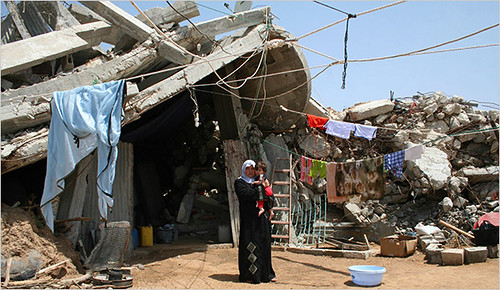
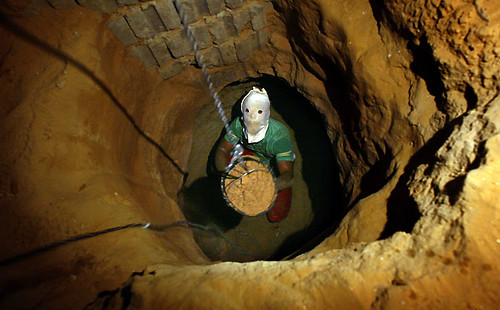
And we can’t leave out the subterranean corridors of the Gaza smuggler tunnels, or the “apartheid urbanism” that continues to segregate the Palestinian community from the Jewish, above and below ground.
And the list goes on and on and on.
Even if we could calculate the cement tonnage of this footprint, I imagine an even larger volume of GWOT’s unholy vault could only be truly gaged by its cavities of architectural secrecy. But, how does one actually try to measure secret space? Our ally, Agent Plorver definitely has a unique approach combining geography and art as a hybrid form of landscape forensics, or something. Maybe our best tool is an experimental science of some kind, yielding geometries of spatial implication.
It’s like knocking on a hollow earth and studying the acoustic properties and vibration signatures of its reverberation. Maybe in this case, we are tracing hint of the political properties of secret space, tracking the legal patterns in their documented/censored jurisdictions, identifying signatures of spatial politics instead of subtle noise rhythms. Who knows?


[Image: NSA Spyroom in San Francisco / AT&T Whistle-Blower's Evidence.]

Certainly, the crypts of the War on Terror are as vastly hidden as they are maybe even obviously contained, vertical as they are horizontal, airborne as they are buried, private and concentrated perhaps as they are mainstream and diluted. I mean, it seems like some form of military space is present everywhere these days, permeating culture, the atmoshere like some groggy blanket of pollution. Are we secretly being haunted by a molecular and osmotic pantheon of war space looming over all our heads?
It swings inside the bowels of drones and unmarked Boeing jetliners from the stealthiest side of the spectrum all the way to an in-your-face side where shrapnel and body parts drape tragic streets only moments before gracing billions of television screens on the nightly news. As much as the War on Terror claims the rawest forms of built environment it is equally if not more so matched by a fetishized mediascape that plasters imagery of the War on Terror everywhere that it is not in existence already, while in between a range of mutant architecture manages to duck out of public view altogether; spaces of power, spaces of terrorism, spaces of subversion, spaces of torture, spaces of biopolitical arrest, dank walls, stark naked madness muddied by the perishing of our ideals. The walls between them are not always as distinguishable as we would like to think. As much as maybe we can approximate our observations of these spaces, situated in their own deviant archeology – their own "colonial present" -- it’s almost like an indiscernible abstract infrastructure both connects and disguises all these spaces at the same time.
I wonder, what will be left of the War on Terror a thousand years from now, what spatial shells might litter the earth, what geopolitical patterns of cracks will expose what we cannot see today of this extralegal landscape? I imagine measuring secret space then to be intimately connected with time and morphology.
But, if our observations of the politics surrounding and supporting this infrastructure of secrecy can help us to infer anything about the physical dimensions of secret space -- how it is politically created, articulated, hidden, how secrecy is politically encoded into space -- then maybe we can actually make some sorts of measurements today. And perhaps the opposite is also true – say we do manage to glimpse these discrete spaces, then what can we make of the fuzzy political logic, or spatial politics of the War on Terror?
Man, I wish I had more answers than I do just overworded and redundant questions.


As the landscape of war goes on unfolding I am totally intrigued by how space somehow resists exposure, and manages to squat in the hollows of abandoned buildings, inside deployable barracks, within the deeply buried lairs of marginalized insurgency, in the middle of American deserts, in the folds and atop the lofty cliffs of conflict’s various stages and vantage points. Architecture takes on the muted glint of obsidian secrecy slightly churning over in the rubble of an endless war's scarred battlefield.
The really scary thing to think about is all of the still yet undetected GWOT spaces there are to discover, to unearth, to vet in the light of legal question.
How can we better understand the physical and political connections binding these spaces – what Eyal Weizman calls a “Hollow Land”? What grouts the tiling of this military urbanism over the planet?
I’m particularly interested in space’s relation to the concept of terrorism as a cultural construct. That is to say, if we accept “the terrorist” as an embodiment of a westernized projection of fear, in part as a product of culture – the boogey man that has rallied the call to arms of colonialism for centuries, having always depended on the existence of an enemy for its own legitimization – then what does that suggest about ‘War on Terror space’ itself?
I’m hardly saying terrorism doesn’t exist, but only wish to explore how terrorism is also in part not only a colonial but an architectural phenomenon as well inextricably woven into our urban psyches, and how the spaces associated with terrorism politically help define, combat, and even fuel it; maybe the War on Terror is a strange kind of psychospatial pornographer, orchestrating these eerie scenes and stages for its own spectacular battles with terrorism, for whom we are all just insipid members of the audience trying to decipher a meaningless program.
Is space to some extent an unconscious collaborator in the psychic making of the west’s fear of terrorism? Of course it is.
I guess it all goes back to that same relationship: how our politics defines our spaces and how our spaces reinforce our politics; or, how the War on Terror produces space and how that space dictates the politics of the War on Terror. And of course, all of the psychology that is the interface between it all. Blah blah blah – blather you've heard from me before a million rhetorical times already.


[Image: Pol-e-Charki Prison, Afghanistan.]

Well, finally, without further rambling ado, we can now add a new space to this wicked pantheon. If you haven’t heard of it already, then let me present to you “Block D.” Or, “Block 4” as it is also apparently known: a newly built detention facility at the notorious Pol-e-Charki (or, Pul-i-Charkhi) prison just on the eastern outskirts of Kabul, in Afghanistan, quickly becoming understood as the Asian corollary of Guantánamo Bay. No matter, it is another utterly disturbing black hole in the universe of legally suspect and secret space.
In fact, as we hear more high profile urgings these days to close Guantánamo down finally once and for all, (or, at least for now), we learn that a sizable majority of the inmates held there have been from Afghanistan. Or, maybe you already knew that, too.

“Afghans were once the largest group of prisoners at Guantanamo, with over 200 Afghan men held there; now there are only about 34 left.”

And, while we may celebrate the fact that many of them are being released these days we quickly come to find that while they are being deported – not only back to Afghanistan – they are being taken directly to Block D, which was constructed specifically to contain the overflow of terrorist suspects from Guantánamo and the nearby Bagram American Airbase whose capacity has been pushed to its absolute limits. Essentially, the detainees are being relayed from one abysmal cage to another. Is that really any surprise though?


[Image: Pol-e-Charki Prison, Afghanistan.]

Pol-e-Charki prison, for those who aren’t familiar, has for decades been synonymous with torture and execution beginning in the ‘80’s during the Soviet era of communist rule, and more recently known for violent riots and dramatic hi-profile escapes by suspected Al-Qaeda or Taleban militants.
In 2006, hundreds of inmates, including convicted al-Qaida and Taliban militants, waving knives and wielding clubs made from furniture overpowered guards and took control of parts of a high-security prison. The prison holds 2,000 inmates, including some 350 al-Qaida and Taliban militants.

In December 2004, four inmates and four guards died during a 10-hour standoff that started when some al-Qaida militants used razors to wrest guns from guards and then tried to break out. Afghan troops stormed the prison and fired guns and rocket-propelled grenades to retake control. (source)
You may also remember that a couple of years ago four al-Qaeda suspects escaped from U.S .custody at Bagram.


[Image: Al-Qaeda man's easy jail escape.]

If it’s true, as this article suggests, that the main reason for the detainee transfer is to help deflect some of the international criticism over Guantánamo Bay, then transferring them to a brand new facility at Pol-i-Charki seems hardly like a genuine gesture to allay the criticism.
In the Washington Post’s early coverage of the CIA’s secret extraordinary rendition prisons, they tracked the development of the detainee population swell by writing “without a long-term solution, the CIA began sending suspects it captured in the first month or so after Sept. 11 to its longtime partners, the intelligence services of Egypt and Jordan.”
But not long thereafter, a month later in fact, according to the Post, the CIA soon found itself with hundreds of prisoners rounded up from the battlefields in Afghanistan on its hands, and with little means for holding them.
“A short-term solution was improvised. The agency shoved its highest-value prisoners into metal shipping containers set up on a corner of the Bagram Air Base, which was surrounded with a triple perimeter of concertina-wire fencing.

[...] in the winter of 2001, that prisoners kept by allied Afghan generals in cargo containers had died of asphyxiation. The CIA asked Congress for, and was quickly granted, tens of millions of dollars to establish a larger, long-term system in Afghanistan, parts of which would be used for CIA prisoners.

The largest CIA prison in Afghanistan was code-named the Salt Pit. It was also the CIA's substation and was first housed in an old brick factory outside Kabul.

Salt Pit was protected by surveillance cameras and tough Afghan guards, but the road leading to it was not safe to travel and the jail was eventually moved inside Bagram Air Base. It has since been relocated off the base.” (source)

Since October 2006, the United States has transferred approximately 50 detainees out of Guantanamo to the custody of the Afghan government, part of a policy aimed at reducing the prison population and ultimately closing the facility. Once home, many of the Afghans have been left in a legal limbo not unlike the one they confronted while in U.S. custody.

For several years after the 2001 U.S.-led invasion of Afghanistan, detainees held at Guantanamo were set free once they returned to this country, due largely to its weak government and lack of infrastructure. But in 2005, American officials began negotiating an agreement that called for the U.S. government to provide Afghanistan with $20 million in aid to build Block D, train detention officials to run it, and develop a set of legal mechanisms. Since the invasion, the United States has pledged at least $160 million for judicial reform in Afghanistan, according to the State Department. (source)
Earlier this year, Joanne Mariner wrote a fantastic article exposing this. Having taken a couple of years to construct, and over a year to train Afghan guards, the U.S. government in 2007 opened Block D for business. “The new prison,” she wrote, “now known as the Afghan National Detention Facility (ANDF), is run by the Afghan government, at least in theory. But the U.S. paid for its construction (those who have been inside say it looks very much like a U.S. prison); the U.S. trained the guard staff (Afghan Ministry of Defense personnel), and the U.S. now claims to have a "mentoring" relationship with the Afghans who are in charge of it.”
If it looks like a rat, smells like a rat, tastes like a rat, then guess what?

0107-for-webBAGRAMsub

[Image: Where the Detainees Have Been Held (NYT) / Foiling U.S. Plan, Prison Expands in Afghanistan.]

As of her article just this February, she reports that thirty-two Afghans have been transferred from Guantanamo to the ANDF, while at least 150 others have been passed on there from the U.S. detention camp at the nearby Bagram. Mariner asks a critical legal question, however: “With some 200 detainees having been formally transferred from US to Afghan custody in less than a year, the pressing question is this: What does this "mentoring" relationship mean?”
Does "mentoring" mean that once a prisoner enters the ANDF he is under the sole dominion and control of the Afghan government, and his fate is in Afghan hands? Or does it mean that the US transfers physical custody of the person, but still retains some control -- or authority, or influence -- over whether and when that person is released?
Mariner also reminds us of the National Directorate of Security (NDS), “Afghanistan's notoriously vicious intelligence service” … writing that former NDS detainees “described being badly beaten, confined in small cages in basement jails, and hung upside down from metal hooks.” Sound familiar?
Continuing, she says “with a newly selected and trained guard force made up of military personnel, not NDS officers, the ANDF is not an NDS dungeon. Still, the question remains of whether it is, to some extent, a Guantánamo annex. Afghans who have been transferred from Guantánamo to the ANDF have said that American personnel are present and active in the facility.”

So, of course, the main question is: who and what government actually oversees Block D? Who is technically responsible for what goes on there? Is this another semi-shielded legally-blurred foreign cover for American detainee rights abuse again? What is, if anything, different about Block D from Guantánamo Bay? Instead of resting on Cuban soil now it merely exists on Afghan turf instead? Is Block D Guantánamo’s carceral twin?
There have been some other great articles written on this recently, so allow me to post in bulk some key portions of those here. Eric Lewis reporting for Slate, says:
“The government claims that the prison is under the sovereign authority of Afghanistan and so lies outside U.S command—and beyond the reach of our courts. Yet these prisoners are being held in a special "national defense" wing built by our government and staffed by American jailers and interrogators. The Policharki transfers are the latest example of the Bush administration's long-running effort to evade judicial review of the thousands of detentions that have resulted from the war on terror.”
He then proceeds to brief us not only on the gruesome history of the Pol-i-Chakri prison and its torturous past, but describes the conditions at Bagram as being even worse than those at Guantánamo. “The U.S. government has conceded that it does not have the resources to determine in a timely way whether individual detainees are being properly held. And Bagram lacks even the unsatisfactory Combatant Status Review Tribunals used at Guantánamo.”
Lewis tells us that “Determinations of combatant status are not made through any evidentiary hearing, but rather by the commanding officer at Bagram, who has discretion whether to gather evidence, hear witnesses, or allow the detainee to present his story. […] Given these conditions, the U.S. authorities are concerned that the Supreme Court's decisions granting detainees some rights to challenge their confinement at Guantánamo could spell legal trouble at Bagram.”
And therein lies the juice: in order to prevent detainees from having access to future rights Block D has been constructed to further file them away in the corridors of the great legal abyss. “No Afghan court appears to have jurisdiction over Policharki's national defense wing," he writes. "Nor have basic rights in Afghan law been afforded to the detainees there. Like our Constitution, the Afghan Constitution provides a right to counsel from the time of arrest, yet to date no Afghan detainee at Policharki has been permitted to see a lawyer, despite requests by family members and Afghan human rights groups.” (source)


[Image: "Afghan men in Kabul in February after they were freed from the United States prison at Bagram." Syed Jan Sabawoon/European Pressphoto Agency (NYT) / Foiling U.S. Plan, Prison Expands in Afghanistan.]

There was even more recently an excellent piece in the New York Times on this written by Tim Golden who deconstructs the political disputes between U.S. and Afghan officials (and even more intriguing within the Afghan government itself) over the terms of development for the new facility, and how it would legally be constituted according to whose model, and overseen by which government.
In a confidential diplomatic agreement in August 2005, a draft of which was obtained by the New York Times, the Bush administration said it would transfer the detainees if the Kabul government gave written assurances that it would treat the detainees humanely and abide by elaborate security conditions. As part of the accord, the United States said it would finance the rebuilding of an Afghan prison block and help equip and train an Afghan guard force.

Yet even before the construction began in early 2006, the creation of the new Afghan National Detention Center was complicated by turf battles among Afghan government ministries, some of which resisted the American strategy, officials of both countries said.

A push by some Defense Department officials to have Kabul authorize the indefinite military detention of “enemy combatants” — adopting a legal framework like that of Guantánamo — foundered in 2006 when aides to President Hamid Karzai persuaded him not to sign a decree that had been written with American help.

Then, last May, the transfer plan was disrupted again when the two American servicemen overseeing the project were shot to death by a man suspected of being a Taliban militant who had infiltrated the guard force.
While Golden’s article also gets into the horrendous conditions at The Bagram Theater Internment Facility, as it is called, and ultimately how it has expanded as to receive the overflow of terrorist suspects rounded up by the U.S. all over the world, he discusses how Afghan officials had rejected pressure from Washington “to adopt a detention system modeled on the Bush administration’s “enemy combatant” legal framework,” and mentions that there were some Defense Department officials who had “even urged the Afghan military to set up military commissions like those at Guantánamo.”
Afghan officials rejected pressure from Washington to adopt a detention system modeled on the Bush administration’s “enemy combatant” legal framework, American officials said. Some Defense Department officials even urged the Afghan military to set up military commissions like those at Guantánamo, the officials said.

Officials of both countries said the defense minister, Abdul Rahim Wardak, was reluctant to take responsibility for the new detention center as the Pentagon wanted, fearing he would be besieged by tribal leaders trying to secure the release of captives. The minister of justice, Sarwar Danish, opposed sharing his control over prisons, the officials said.

American officials finally brokered an agreement between the ministries, internal documents show. But that did not resolve more basic questions about the legal basis under which Afghanistan would hold the detainees.

For nearly a year, American military officials and diplomats worked with the Afghan government to draft a plan for how it would detain and prosecute all prisoners captured in Afghanistan. Colonel Supervielle, who had helped set up legal operations at Guantánamo, said the effort in Afghanistan was in some ways more complex. “You weren’t dealing just with a U.S. interagency process,” he said. “It involved the interagency process, bilateral relations with Afghanistan, the military coalition and other international interests.”

The draft law was finally delivered to Mr. Karzai in August 2006. Despite American entreaties, he decided not to sign it after opposition from senior aides, officials said.
I guess it is still largely and conveniently unclear as to what exact legal framework really governs Block D. In the rest of Golden’s , which I urge you to go read for yourself, he breaks down how the design of the wing has turned out to be a major flop due to various factors, like religion and how the detainees might (or might not) be able to share cells and bathrooms, and how the Afghan guards would or would not be able to manage high profile detainees. The gist, is that the estimated design called for a total capacity of 670 prisoners, but eventually was cut in half later by design decisions, which means more detainees will remain at Bagram. Is that a good thing, I don’t know. The conditions there from what I can tell are worse than anywhere else, yet, since it is an American base is there still hope that those detainees there may one day receive more legal recourse than those lost to the new Block D?


Finally, not long ago Human Rights First delivered a report on the U.S.’s involvement (or lack of involvement, as the case may be) in the kinds of court proceedings taking place for detainees in Afghanistan after being transferred from Guantánamo and Bagram.
"The United States has turned over the prosecution of Afghan Bagram and Guantánamo detainees to the Afghan criminal courts, but has consistently failed to provide sufficient evidence to support the allegations of criminal activity necessary for fair trials, said " Sahr MuhammedAlly, the report’s author and a senior associate in Human Rights First’s Law and Security program.

The so-called "evidence" being used to prosecute the repatriated detainees violates international fair trial standards and, in many cases, Afghan law, the report finds. The U.S. government provides the Afghans with "highly general" declassified versions of the Detainee Assessment Branch Reports of Investigation (ROIs), which form the basis of the Afghan charges. Typically, these ROIs state the date of capture, the capturing force and what the detainee was alleged to have done. Absent, however, is real evidence, such as the names of individual witnesses or statements in the court dossier—sworn or unsworn—of any U.S. soldiers or officials involved in the capture or interrogation of the detainee.

In the trials witnessed by Human Rights First, and in all of these trials, according to defense lawyers interviewed by Human Rights First, there are no prosecution witnesses called to testify or even sworn witness statements submitted by the prosecution, and there is little or no physical evidence. The trials are conducted based on the in-court reading of investigative summaries prepared by U.S. and Afghan officials which purportedly support the allegations. “These no-witness, little to no evidence, paper trials deny the defendant the fundamental fair trial right to challenge the evidence and mount a defense,” said MuhammedAlly.

More than 160 Block D cases have been referred for prosecution thus far, while the charges against the rest have not yet been finalized. Charges under Afghan law range from the destruction of government property to treason and threatening the security of Afghanistan. Trials last from 30 minutes to an hour, according to personal observations of trials cited in the report and in-person interviews with Afghan officials and defense lawyers involved in these trials. Since the trials began in October 2007, 65 former U.S. detainees have been convicted and sentenced to either time-served or imprisonment ranging from 3 to 20 years, while 17 have been acquitted.
More to come, of course, as I come across it. But, let’s not let Gitmo get all the fame and fortune, there are other equally if not more deserving architectural candidates for the worst place on earth to be as a GWOT detainee, and with all the ruckus over the Cuban-based detention center, it kind of makes one wonder if it isn’t making now for the perfect distraction tactic from noticing the other equally if not even more real and heinous detention camps doing the dirty job of torture elsewhere where the public is hardly aware.

Friday, April 18, 2008

Al Quds Street, Sadr City


[Image: U.S. Begins Erecting Wall in Sadr City, New York Times, photo by Joao Silva, 2008.]

Well, you knew it was coming, and it sure didn’t take long. American forces began constructing a new wall in Baghdad last night, in Sadr City where regular skirmishes between US-Iraqi forces and Shiite militias haunt the streets, and reconstruction efforts in the area are routinely hampered by a sad mix of violence and politics, among other factors, to say the least.
According to the New York Times, “The construction, which began Tuesday night, is intended to turn the southern quarter of Sadr City near the international Green Zone into a protected enclave.” American and Iraqi forces say they’ve been battling “Iranian-backed groups and militia fighters who support Moktada al-Sadr, the anti-American cleric. Much of Sadr City has become a sanctuary for such militias.”
Having mentioned these stealth-builder missions before, the Times provides us a glimpse of life-on-the-line laying barrier in the trenches of today’s great concrete footprint of war.
“On Wednesday night, huge cranes slowly lifted heavy concrete blocks into place under a moonless sky. The barriers were implanted on Al Quds Street, a major thoroughfare that separates the Tharwa and Jamilla districts to the south from the heart of Sadr City to the north.

The avenue was quiet except for the whirring sound of the cranes and thud of the barriers as they touched the ground. […]

Al Quds Street has become a porous demarcation line between the American- and Iraqi-protected area to the south and the militia-controlled area to the north.

The avenue has been filled with numerous roadside bombs that American teams in special heavily armored vehicles have sought to clear. The militias have stacked tires on the road and turned them into burning pyres to hamper the American infrared surveillance and targeting systems or to soften the concrete to make it easier to bury bombs. […]

The team building the barrier was protected by M-1 tanks, Stryker vehicles and Apache attack helicopters. As the workers labored in silence, there was a burst of fire as an M-1 tank blasted its main gun at a small group of fighters to the west. An Apache helicopter fired a Hellfire missile at a militia team equipped with rocket-propelled grenades, again interrupting the night with a thunderous boom. A cloud of dark smoke was visible in the distance through the Stryker’s night-vision system."

Since similar walls have gone up in and around Baghdad, officials claim reconstruction efforts and security conditions have improved in these neighborhoods. But I’m always interested how these walls are described to us politically and strategically, as either isolating the militias on the outskirts into cloistered neighborhoods, or as protecting the neighborhoods under threat behind barriers turning them essentially into "protective enclaves" and gated communities. One view is intended to describe an isolation outwards, shutting the militias out, while another describes an isolation inwards, enclosing the communities within. Either way, the wall serves these effects the same, but it is always curious to see how the wall is sold; as a gated community or an insurgent holding pen.
Nevertheless, I understand the short-term effect of these barriers, but we hardly hear enough any discussion from the media or American/Iraqi officials about the long-term effects of using this strategy. Can a nation really be successfully rebuilt behind a micro-insertion of blast walls? I also understand that security needs to be obtained first, but will the walls lead to a more long term systemic security? An eradication of these militias? I seriously doubt that.
Essentially, Baghdad is being reconstructed behind a system of neighborhood dams; or, the warfare equivalent of an urban levee network. But, one wonders, when will we celebrate the stories of the walls coming down? Who knows when or how long that story will ever take in Baghdad to surface, or the West Bank, or anywhere else for that matter, aside from perhaps Cyprus (so there may be hope yet).
More than likely, however, we may be hearing more about the levees being blown apart in these street corners (remember the recent Gaza episode?) than being peacefully and politically deconstructed.
Can a foreign military occupation really fend off an insurgency this way forever? Can a nation truly revive itself with this type of fortress prosthesis, or are these walls more like rebuilding a house of concrete cards?

Also, see: Making Perfunctory Preparations for Combat in Anti-American Cleric’s Stronghold
Iraqi Unit Flees Post, Despite American’s Plea

(Thanks Rob!)

Sunday, April 13, 2008

Missin' the AAG '08

boston_societies_1880

[Image: Boston 1880 - Societies-Secret and Benefit, Hospitals, Asylums and Homes, from Report on the Social Statistics of Cities, Compiled by George E. Waring, Jr., United States. Census Office, Part I, 1886.]

Sadly, I will not be able to attend this year's Association of American Geographer's meeting in Boston all next week, due to my craptastic back injury, which is finally beginning to make some progress distancing me further from the freaky prospect of having to have disc surgery. Finally, whew!
Nevertheless, I was scheduled to appear on a panel this coming Tuesday afternoon entitled Architectures of Security: Border/Space in a Mobile World. Was super excited (for obvious reasons) but, also to be presenting with the likes of Louise Amoore, Alexandra Hall and Stephen Graham from Durham University in the UK, Deborah Cowen out of the University of Toronto, and Keller Easterling from Yale. A roundtable on borders and militarism with these folks is an absolute privilege for this little blogger, let me tell ya.
Check out everyone's abstract:
Deborah Cowen - University of Toronto / The Border as 'Seam': Logistic Space, the Social, and Security
Louise Amoore & Alexandra Hall - University of Durham, UK / Taking People Apart: Digitized Dissection and the Body at the Border
Stephen Graham, Prof - Durham University / Global Homelands: Geographies Of Urban Rebordering
Bryan Finoki - Subtopia / Subverting the Nomadic Fortress
Keller Easterling - Yale University / Border Mimicry
Wicked. After reading these, I was even more excited to hear these ideas developed further than I was to actually give my own presentation, which, as you can see, was going to offer some research into the history and phenomenon of cross-border tunnels perforating the U.S. and Mexico boundary.
Yeah, I'm bummed... this would have been fabulous, to present, to meet folks, and to just wander around the great arcade of geographers and assorted landscape heads who are in my mind doing some of the most intriguing and important work I can dream about, many of whom are surely Subtopianites!, right???
Last year was great to have met a bunch, so I'm sorry I won't be able to follow up with many of you this time around! Next year.....
However, I am using my undelivered paper to further a crazy book proposal around border spaces, so - certainly, all is not lost this time aroud. But, more on that topic later.
As it's turned out, the panel has slimmed down quite a bit due to a crazy synchronicity of unforseen forces. Louise, Keller, Stephen, and myself have all had to pull out for various personal reasons, leaving Deb and Alex to co-star the session. But don't let that deter you from checking it out if you are in Boston