Instead of rambling myself, I will just let them do the talking.
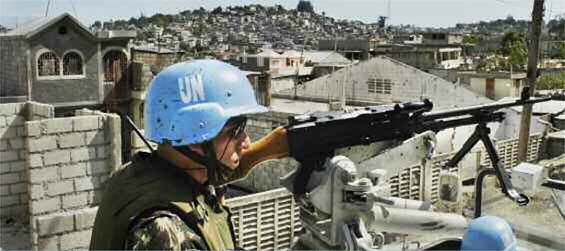
"What is it about an urban environment that assures human security or makes its achievement more difficult, and how does it interface with human and state conflict?
With the shift from international to intra-state conflict since the 1960s, cities are playing a more significant role in patterns of conflict and in traditional themes of human security. These conflicts are characterized by the pre-eminence of small arms and the participation of irregular forces operating outside accepted humanitarian norms, making them at once more decentralized and less disciplined.
It is in this increasingly urbanized world that cities act simultaneously as organic centres of vibrant social and economic networks, engines of security and economic opportunity, and beacons for refugees. They are also home to one billion of slum-dwellers, and are the targets of terrorism and war. Undoubtedly, the central role of cities in modern life makes them key building blocks in ensuring freedom from fear. Human security in urban spaces is one of the key challenges—and opportunities—in the coming quarter century: will they be building blocks of peace or tumbling dominoes of conflict?"
They also feature a bi-lingual online publication, the Human Security Bulletin, which features different research on places like Columbia and Indonesia, and has an active newswire of ongoing conflicts as well. Their funded by the Human Security Program of the Foreign Affairs Canada (FAC), and even offer a Graduate Research Award. Look out!
Brian,
ReplyDeleteIf you or anyone else would like to receive the Human Security Bulletin from CCHS, or more information about the HS and Cities work we are doing with Foreign Affairs Canada, please e-mail cchsra@interchange.ubc.ca and I will add you to our list.
Many thanks.
madeleine,
ReplyDeletethanks for your note. i am sending you an email right now. looking forward to the updates.
bryan